


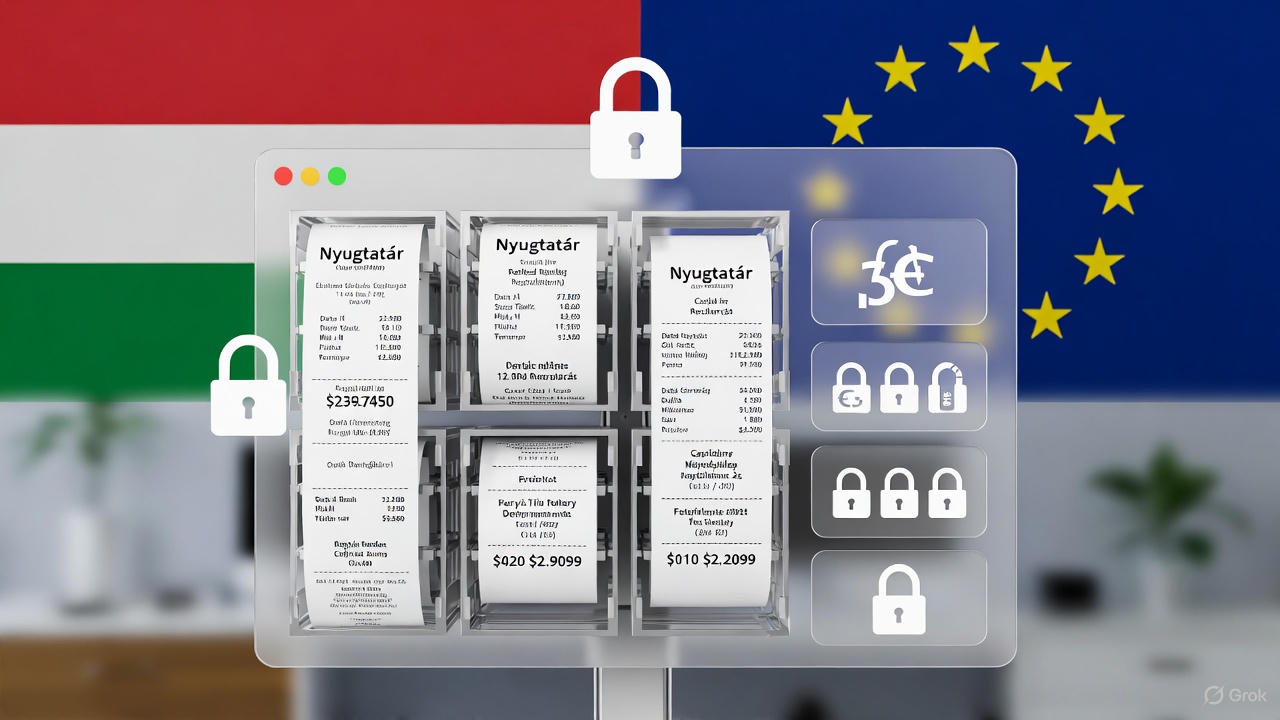
As a retail tech enthusiast, I’ve been following fiscalization trends across Europe, and Hungary’s evolving system stands out for its push toward full digital compliance. Today, let’s dive into Nyugtatár, the Hungarian “Receipt Archive” – a key pillar of the country’s tax digitization efforts. If you’re a retailer, POS software vendor, or even a consumer in Hungary, this could directly affect you.
I’ll break it down step by step, based on the latest updates from the National Tax and Customs Administration (NAV).
What is eNYUGTA?
eNYUGTA refers to the electronic receipt itself. It’s a digital version of a traditional paper receipt (nyugta) issued during transactions.
It is generated using an electronic cash register (ePG), which can be hardware-based, cloud-based, or app-based.
eNYUGTA is issued automatically in electronic form, with the option for buyers to request a paper copy. It includes mandatory details like issue date, serial number, issuer’s tax ID, and transaction data. Optional buyer details (e.g., for warranties) can be added but are protected from NAV access.
From July 2025, new traditional online cash registers can no longer be deployed, and by 2028, existing ones will be phased out in favor of ePG systems.
What is Nyugtatár?
Nyugtatár, which translates to “Receipt Archive” or “Receipt Repository,” is a centralized electronic storage platform managed by NAV. It’s part of Hungary’s broader shift to e-receipts (electronic receipts) and real-time invoice reporting (RTIR). Essentially, it’s a digital vault where receipt data from sales transactions is securely stored, archived, and made accessible for tax audits. This replaces traditional paper receipts with electronic versions, ensuring all retail transactions are traceable and tamper-proof.
Unlike simple digital receipts, Nyugtatár integrates with NAV’s Online Számla system, allowing for automated data submission and long-term storage (up to 10 years). It’s designed for both B2B and B2C transactions, with a focus on retail sales via point-of-sale (POS) systems.
This means eNYUGTA and Nyugtatár are components of Hungary’s electronic receipt system introduced by the National Tax and Customs Administration (NAV)
eNYUGTA is the individual digital receipt and the process of issuing it (via ePG). Nyugtatár is the backend infrastructure for storing, managing, and transmitting those receipts.
eNYUGTA is created at the point of sale and sent immediately to Nyugtatár. Nyugtatár receives, stores, and forwards data to NAV, acting as an intermediary that prioritizes data protection.
Retailers issue eNYUGTAs, while consumers access them through Nyugtatár via an app. Nyugtatár ensures long-term availability and privacy.
eNYUGTA contains transaction details, but Nyugtatár is built to not access or “know” sensitive data, emphasizing end-to-end encryption and compliance with privacy laws.
And at the end of this small introduction, eNYUGTA focuses on issuance technology (ePG), while Nyugtatár is about storage and accessibility, supporting the overall system’s goals of digitalization and tax transparency.
In essence, eNYUGTA is the “what” (the receipt), and Nyugtatár is the “where” (the secure vault for storing and accessing it). This system aims to modernize retail transactions in Hungary while maintaining strong data privacy.
Who is Responsible for Nyugtatár?
The primary responsibility lies with NAV (Nemzeti Adó- és Vámhivatal), Hungary’s National Tax and Customs Administration. NAV oversees the platform’s operation, data security, and enforcement. However, implementation involves multiple stakeholders:
- POS Software Vendors: They must develop and certify systems compatible with Nyugtatár for e-receipt generation and submission.
- Retailers: Businesses are accountable for using compliant tools and ensuring accurate data archiving.
- Service Providers: Third-party platforms like Számlázz.hu or fiscal software companies e.g. Fiscal Solutions handle integrations and support.
NAV provides guidelines and portals for registration and testing.
Why is the Government Doing This?
The Hungarian government, through NAV, is implementing Nyugtatár to combat tax evasion, reduce the grey economy, and enhance fiscal transparency. By digitizing receipts, it minimizes fraud like under-reporting sales or falsifying records – common issues in cash-heavy retail. It also streamlines audits, cuts administrative burdens (e.g., no more paper storage), and aligns with EU directives like ViDA (VAT in the Digital Age) for harmonized e-invoicing.
Broader goals include boosting economic efficiency, supporting digital transformation, and generating real-time data for policy-making (e.g., using AI to analyze trends). This fits Hungary’s ongoing fiscal reforms, which started with RTIR in 2018 and now expand to e-receipts for better VAT compliance.
Technical Requirements used Software
POS vendors or providers of fiscal middleware solutions must ensure their systems integrate seamlessly with NAV’s infrastructure. Key requirements include:
- Real-Time Reporting: Software must generate e-receipts in XML format and submit them via NAV’s Online Számla API for validation.
- Data Archiving: Automatic upload to Nyugtatár, including transaction details like amount, date, items, and VAT.
- Security Features: Use of digital signatures (e.g., QES) and encryption to prevent tampering; compliance with GDPR for data privacy.
- Certification: Vendors need NAV approval, involving testing for compatibility with e-cash registers and handling offline modes (with delayed submission).
- Updates for 2025+: Support for stricter data checks (e.g., rejecting incomplete submissions) and integration with energy sector B2B e-invoicing.
Non-compliant software could lead to vendor fines or loss of market access. Vendors like Fiscal Solutions or local providers offer middleware to simplify this.
Tasks and Requirements for Retailers
Retailers (including small shops and large chains) must:
- Adopt Compliant Systems: Upgrade POS to NAV-certified e-cash registers or software that generates and archives e-receipts.
- Real-Time Submission: Report all receipts (B2C and B2B over certain thresholds) via Online Számla; for e-invoicing, use XML formats.
- Data Management: Ensure accurate transaction logging, including customer opt-in for e-receipt delivery (via email or app).
- Archiving: Use Nyugtatár for storage; retain access for audits.
- Training and Compliance: Train staff on digital processes; monitor for errors like mismatched data.
For energy sector retailers, e-invoicing is mandatory from January 1, 2025. All must prepare for full e-receipt rollout.
Important Dates to Respect
- January 1, 2025: Mandatory e-invoicing for energy sector B2B transactions.
- September 15, 2025: Stricter invoice reporting rules enforced, with automatic rejections for errors.
- September 1, 2026: Full e-receipt system implementation begins (voluntary phase ends).
- July 1, 2028: Complete mandatory switchover to e-receipts for all businesses; paper receipts phased out.
Early adopters can test via NAV portals now.
Penalties for Non-Compliance
Fines are steep to enforce adherence:
- Per Invoice/Receipt Violation: Up to HUF 1,000,000 (~€2,500) per non-compliant submission, starting September 15, 2025.
- Systematic Failures: Higher penalties for repeated offenses, up to HUF 10 million for businesses, plus potential business suspension.
- Data Errors: Automatic rejections lead to resubmission fees; fraud cases could trigger audits and criminal charges.
NAV emphasizes education first but ramps up enforcement post-deadlines.
What Can or Should Consumers Do?
Consumers play a passive but empowered role:
- Opt for E-Receipts: Request digital versions at checkout (via email or app) to reduce paper waste and easily track purchases.
- Access Archives: Use NAV’s consumer portal to view archived receipts for tax deductions or disputes.
- Report Issues: If a retailer fails to provide a receipt (digital or paper), report to NAV – this helps enforcement.
- Privacy Awareness: Ensure personal data in receipts complies with GDPR; consumers can request data deletion if needed.
Overall, it simplifies record-keeping for refunds or warranties, promoting a greener retail experience.
Conclusion
Hungary’s Nyugtatár brings clear advantages for retailers. By removing paper receipt printing, it cuts costs, speeds up checkout, and unlocks useful analytics to improve inventory planning and product availability.
The main hurdle is the upfront investment for smaller shops—POS upgrades can cost around HUF 500,000, but government subsidies can offset part of that expense.
In a broader context, Nyugtatár aligns with systems already running in countries like Croatia and Brazil and fits into the EU’s ViDA push for digital, real-time tax reporting—changes that may also streamline cross-border retail operations.
Looking ahead, NAV plans to embed AI for anomaly detection in Nyugtatár data by 2027, further strengthening fraud prevention.
If you operate in Hungary’s retail sector, now is the moment to audit your systems and roadmap your rollout. Check NAV’s official guidance or speak with fiscal experts.
Staying compliant isn’t just a legal box to tick, it’s smart business.
Sources:
https://www.fiscal-requirements.com
https://dddinvoices.com/de/learn/e-invoicing-hungary
https://www.vatcalc.com/hungary/hungary-e-cash-registers