


How 197 Markets Are Rewiring the Retail Transaction

Before your next international rollout, understand the fiscalization landscape your business is entering.
A decision about fiscalization can become a decision about your entire retail architecture. It can affect which POS solution you select, how transactions are reported, what happens during an outage and how easily your business can enter the next market.
The Global Fiscalization Atlas 2026 brings research across 197 countries and jurisdictions into one comparative view, helping retailers and solution providers understand where fiscalization exists, which control models are used and what those differences mean for technology and business strategy.
A global research effort with a distinctive scope
We believe this is the first global comparative study of retail fiscalization to combine research across 197 countries and jurisdictions with a common analytical framework for fiscal status, technology architecture, technical control signals and indicative complexity.
That combination matters. It allows you to look beyond individual country requirements and see the patterns that shape international retail: where software is becoming the control layer, where hardware remains important and where transaction reporting changes the operating model.
Three findings that change the conversation
- 107 of the 197 markets analysed are classified as clearly fiscal in the dataset. Fiscalization is a majority-market reality in this research snapshot.
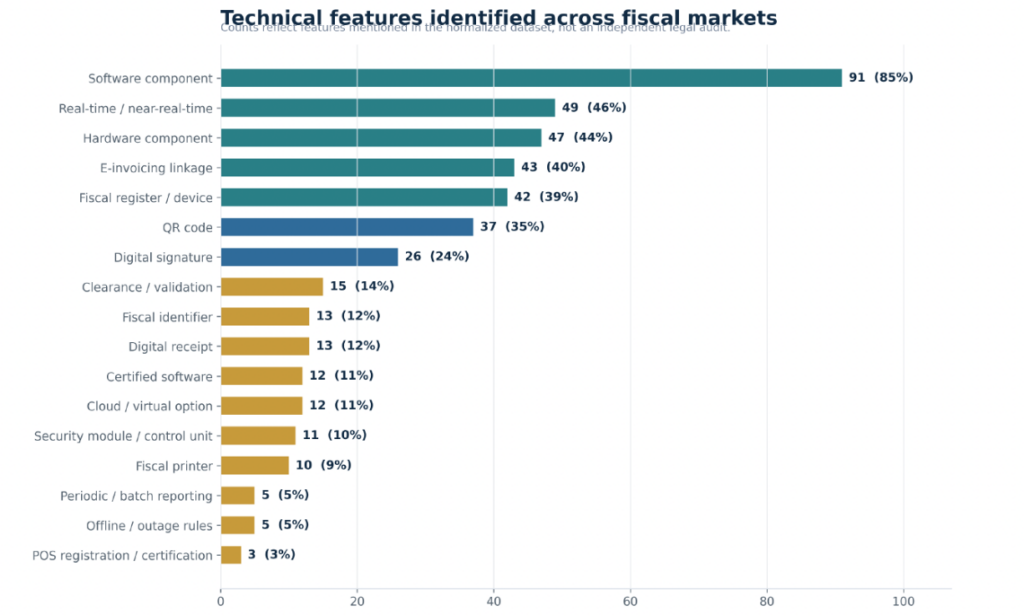
- 85.0% of those 107 fiscal markets use software as a material component of their fiscal architecture.
- 43.9% still involve hardware through dedicated devices or hybrid models. Software adoption and hardware involvement overlap.
Figures refer to the Atlas dataset and its July 2026 research snapshot. They describe classified markets, rather than every obligation affecting every retailer.
What the Atlas helps you decide
For retailers planning international growth
Your expansion plan may look like a list of countries. Your technology team must turn that list into a working transaction environment. The Atlas helps you understand the differences early enough to bring them into discussions about POS selection, rollout sequencing, local partners and ongoing support.
Use it to frame the questions that should come before implementation:
- Which markets share architectural characteristics that may support reusable capabilities?
- Where might devices, controlled software or government connectivity change the integration approach?
- What do reporting, transaction evidence and offline resilience mean for store operations?
- Where does your existing knowledge coverage need to be strengthened before you commit?
A broader view helps leadership, tax, IT and operations discuss the same landscape before country requirements turn into late project discoveries.
For POS vendors and solution providers
International country coverage is a product decision as well as a delivery commitment. The Atlas gives POS software vendors, hardware suppliers, payment and ERP providers a comparative foundation for deciding where to expand and which compliance capabilities deserve investment.
It connects architecture families and regional patterns to practical product questions:
- Which capabilities belong in a common platform, and which require maintained local components?
- How do hardware, software, online and hybrid models affect integration and support?
- Where could regulatory complexity create demand for specialist services or partnerships?
- How should transaction evidence, connectivity and regulatory change influence your roadmap?
For executives, architects and product teams, the value lies in seeing how national differences connect to a wider market strategy.
A reference for the decisions ahead of implementation
Keep the Atlas close when evaluating a new country, preparing a POS replacement, discussing an international product roadmap or briefing a leadership team. It provides a shared starting point for informed questions and more focused local investigation.
What is inside the book
The Atlas combines executive analysis, visual comparisons and a country and jurisdiction reference appendix. Its chapters explain the global picture and then examine the implications for different parts of the retail technology ecosystem.
The global fiscalization landscape
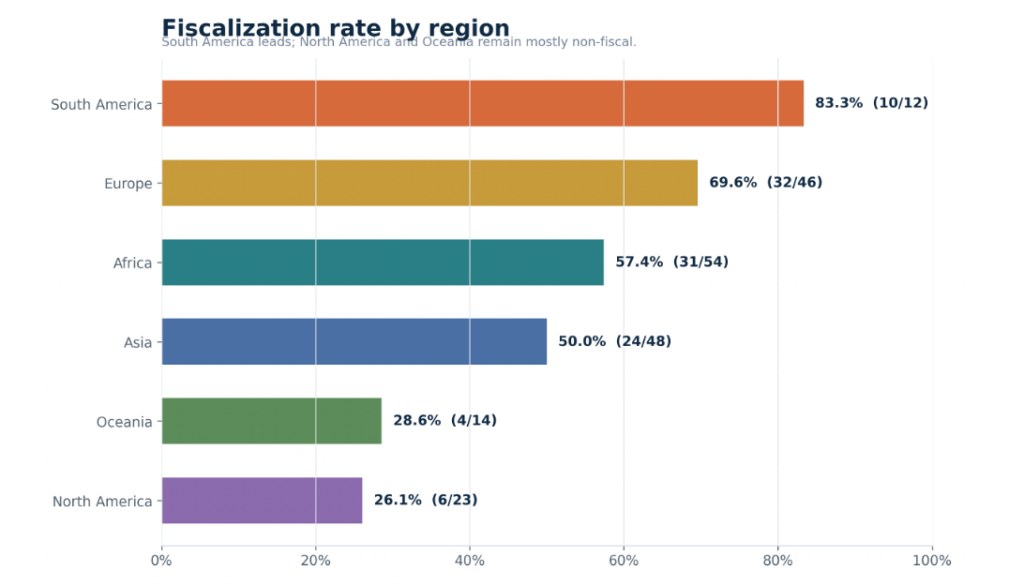
Compare fiscal, non-fiscal, transition, partial and mixed-jurisdiction classifications across the 197 records, with regional adoption patterns and statistical tables.
Four principal architecture families
Understand hardware-based, software-based, online or real-time software, and hybrid hardware and software models, including their implications for integration and operating responsibility.
Technical evidence and operational complexity
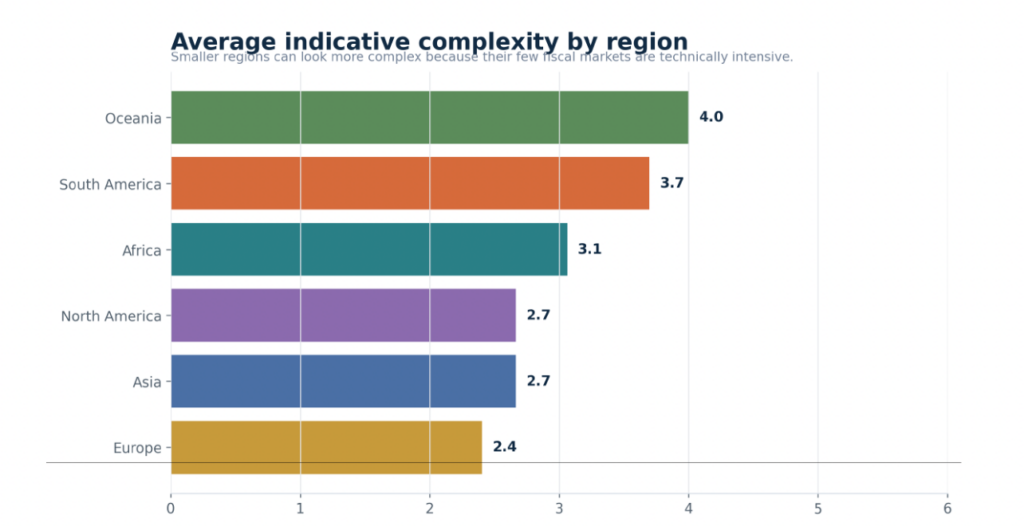
Explore the controls identified in the dataset, including QR codes, digital signatures, reporting and authority validation, alongside indicative complexity, resilience and operational risk.
Regional analysis and market opportunity
Read regional deep dives and examine how fiscalization architecture and knowledge coverage can inform expansion, partnerships and service opportunities.
Implications for retailers and vendors
Find dedicated analysis for retailers, POS software vendors, hardware and infrastructure vendors, consultants and service providers.
Outlook and country reference
Explore market archetypes, an outlook to 2030, an action agenda and the country and jurisdiction atlas, supported by methodology notes and a glossary.
Research behind the Atlas
The publication is built on months of country research by the Fiscal Solutions legal consulting team, led by Tara Nedeljković. Their work provided the knowledge foundation for comparing jurisdictions across the world.
My contribution was to normalize the material, develop the analytical structure, identify global patterns and interpret what they mean for retailers and technology providers. The book explains its methodology and the limits of its indicators so readers can understand the basis of the comparisons.
Its indicative complexity score reflects selected technical features identified in the supplied country narratives. It is a comparative signal, rather than a complete measure of implementation effort or a legal ranking.
Book details and reader questions
About the author
I am Darko Pavic, founder and board member of Fiscal Solutions. For more than 25 years, my work in retail technology has focused on fiscalization, POS systems and the challenges of bringing retail solutions into different national environments. I wrote the Atlas to make the global patterns behind those local challenges more visible and useful for business decisions.
Book at a glance
| Title: | The Global Fiscalization Atlas 2026 |
| Subtitle: | How 197 Markets Are Rewiring the Retail Transaction |
| Author: | Darko Pavic |
| Edition and language: | First edition, 2026 · English |
| Format: | Paperback |
| Scope: | 197 countries and jurisdictions |
| Research snapshot: | July 2026 |
| Country research: | Fiscal Solutions legal consulting team, led by Tara Nedeljković |
Frequently asked questions
What is The Global Fiscalization Atlas 2026 about?
It is a comparative study of retail fiscalization across 197 countries and jurisdictions, connecting fiscal status, technology architecture and technical control signals to business and technology decisions.
Who should read the Atlas?
International retailers, POS software and hardware vendors, payment and ERP providers, consultants, compliance teams and leaders responsible for expansion or retail technology strategy.
Does it include non-fiscal countries?
Yes. The study includes fiscal and non-fiscal markets as well as transition, partial and mixed-jurisdiction classifications. The 197 records are not all classified as fiscal.
Is it a country implementation manual?
The Atlas supports comparative analysis and strategic planning. Specific implementations still require current official requirements and local legal and technical verification.
How does it relate to the Maturity Model book?
The Atlas examines the global market landscape. The Fiscalization Compliance Maturity Model focuses on how an organization develops and manages its own compliance capability. The books provide complementary perspectives.
Where can I buy the book?
Order the paperback through the Amazon link on this page.
Related reading: The Fiscalization Compliance Maturity Model — https://darkopavic.xyz/the-fiscalization-compliance-maturity-model/
Bring the global picture into your next decision
Before you commit to the next market or platform investment, give your team a comparative view of the fiscalization landscape. Order The Global Fiscalization Atlas 2026 and use it as a reference for your expansion and technology discussions.
Suggested citation: Pavic, Darko. The Global Fiscalization Atlas 2026: How 197 Markets Are Rewiring the Retail Transaction. 2026.