


The next phase of fiscal compliance is no longer only about issuing a correct receipt. It is about connected systems, structured data, digital receipts, certified components and tax authorities that expect faster, richer and more reliable transaction visibility.
Europe’s fiscalization landscape is entering a new stage, and the most important signal for retailers and retail technology vendors is not that another set of local rules is changing. The deeper message is that fiscal compliance is moving from device-centric control toward data-centric infrastructure, where receipts, invoices, payment methods, reporting files and communication with tax authorities increasingly become part of the same digital control environment.
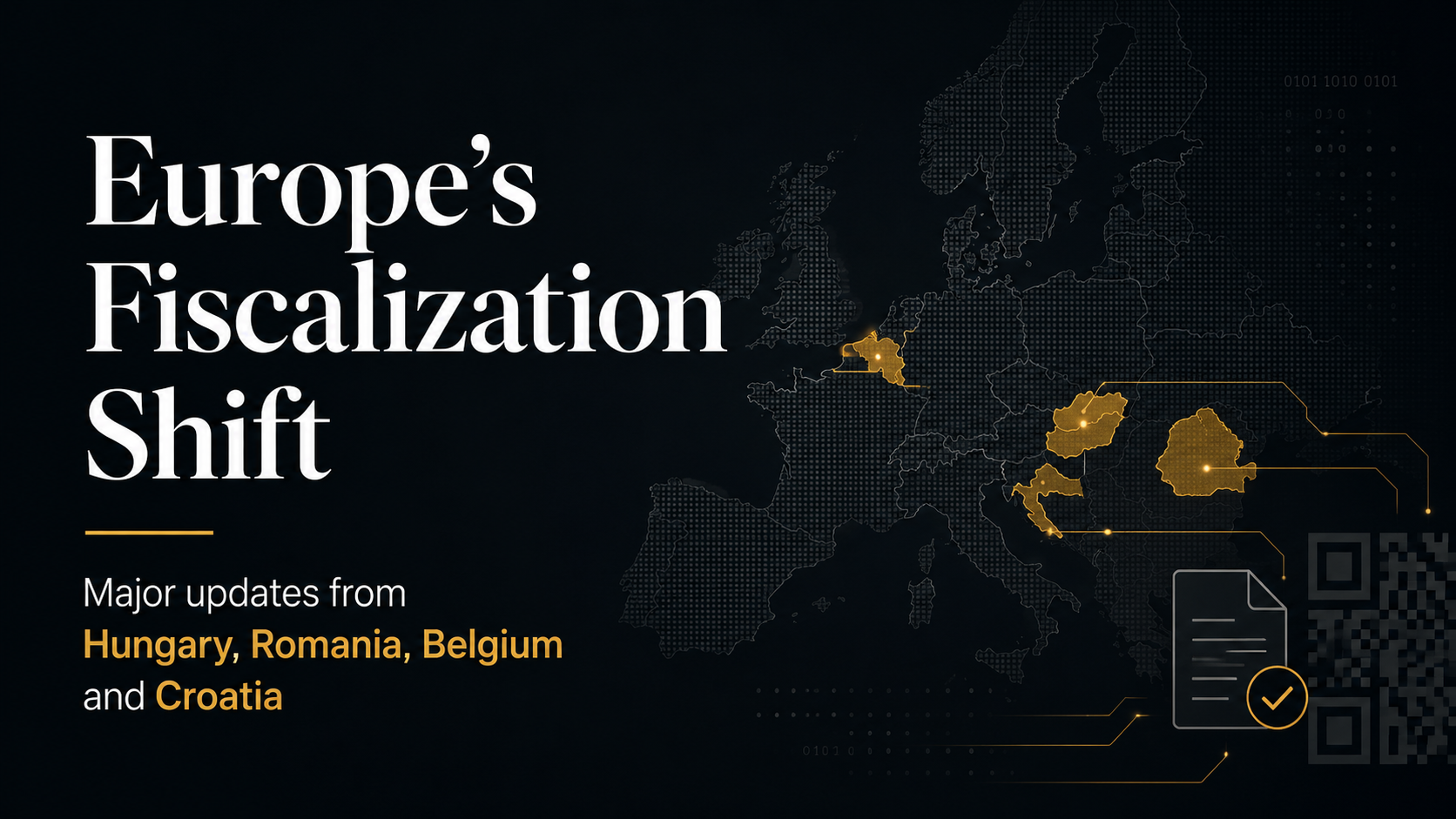
That shift was the central message of our recent Fiscal Solutions webinar on Hungary, Romania, Belgium and Croatia, four countries that are moving at different speeds but in the same general direction. Each country still has its own legal history, technical model and implementation timeline, yet all four show that fiscalization is becoming more connected, more automated and more operationally demanding for retailers, POS vendors, fiscal device providers and software companies working across European markets.
For companies that operate in many countries, the challenge is no longer limited to understanding whether a fiscal receipt must be printed, signed or transmitted. The bigger question is whether the entire retail architecture can adapt when tax authorities introduce electronic receipts, QR codes, new certification rules, updated payment obligations, online communication, e-invoicing and broader reporting expectations within the same planning horizon.
The broader European direction is clear
The reforms discussed in the webinar are part of a wider European move toward real-time and near real-time digital transaction visibility. Governments are looking for better ways to reduce VAT gaps, detect underreporting, include modern sales channels and monitor payment flows that were not fully covered by older fiscalization models. Traditional cash register systems were often built around the physical checkout, the cashier, the cash drawer and a limited set of payment methods, while modern retail has moved into omnichannel selling, mobile payments, self-checkout, e-commerce, delivery models and integrated ERP environments.
This is why the current wave of changes matters. The new rules are not isolated technical updates. They are symptoms of a larger regulatory transformation in which fiscalization, e-invoicing, e-reporting and tax authority data exchange are beginning to converge. For retailers and software providers, the safest conclusion is that fiscal compliance should be treated as a long-term architecture topic, not as a local patch around a receipt printer.
Hungary is preparing for the e-cash register era
Hungary has one of the more established fiscalization systems in the region, with the Online Cash Register model operating under the supervision of the National Tax and Customs Administration. The important development now is the transition toward electronic cash registers, known as e-cash register or EPG solutions, and the related move toward electronic receipts.
The Hungarian model creates a clear distinction between hardware-based and cloud-based e-cash registers. For businesses that are already required to use online cash registers, such as many retail stores, supermarkets, hospitality businesses and restaurants, the replacement path is currently expected to lead toward hardware-based e-cash registers. These systems must support secure communication, certification, real-time receipt transmission and, importantly, offline operation capability. Existing online cash registers are expected to be replaced by hardware-based e-cash registers by 1 July 2028, while both systems may operate in parallel during the transition period.
Cloud-based e-cash registers have a different role. Based on the current understanding presented in the webinar, they may be used by businesses that are not obligated to use online cash registers, such as certain service providers, freelancers or other companies outside the traditional cash register scope. They operate through cloud software and API-based communication with the tax authority, but they do not replace the hardware path for the larger group of mandatory cash register users.
The second major Hungarian topic is the e-receipt. Digital fiscal receipts are becoming the primary receipt concept in the new ecosystem and can be accessed through QR codes, search keys and customer applications. This opens possibilities that did not exist in the traditional paper receipt model, including additional receipt-related attachments and more customer-facing flexibility. At the same time, Hungary is not simply abolishing paper. Customers will still be able to request a paper receipt or paper copy, which means retailers must remain prepared for printing even inside a digital receipt environment.
A separate but important Hungarian change concerns mandatory receipt data reporting from 1 September 2026 for businesses that use manual receipts or otherwise do not have connected systems for receipt data reporting. Receipt data must be provided within three calendar days, while businesses already using connected online cash registers or e-cash registers should generally be covered through automatic reporting. The practical message is that Hungary wants receipt data reporting to become automated for a broader business population, not only for those already inside the classic cash register scope.
During the webinar question session, Tara Nedeljkovic also clarified that, so far, only tax authority solutions are publicly known as available and certified, while additional certified e-cash register solutions are expected to appear through the official list on the authority side. This means the Hungarian transition is moving, but the commercial ecosystem around certified solutions is still developing.
Romania is turning the receipt into structured fiscal data
Romania remains a hardware-based fiscalization country, with certified fiscal electronic cash registers, fiscal printers and other approved devices forming the core of the compliance model. These devices must communicate with the National Agency for Fiscal Administration, ANAF, and the country is now moving toward stronger integration between fiscal receipts and broader digital tax systems.
The most visible Romanian change is the introduction of QR codes on fiscal receipts. The requirement affects receipt layout, fiscal receipt data and the technical capabilities of fiscal devices and POS systems. The QR code is expected to include elements such as the fiscal device serial number, a unique receipt number, fiscal identification data and other validation elements defined by the Romanian authority. The deadline presented in the webinar was postponed to 1 November 2026, but the postponement should not be misunderstood as a reason to wait. The requirement affects retailers, fiscal device providers and POS providers, and the implementation work may be more substantial than many companies initially expected.
Romania is also moving toward a broader digital receipt environment, although printed fiscal receipts remain the standard form in everyday retail transactions. Electronic receipts are expected to become possible from November 2026, and the concept of generating a receipt may replace strict printing requirements in selected cases. Today, Romania still does not offer a universal standalone e-receipt model for all retail transactions, but there are exceptions, including cases connected with credit or debit card payments where a bank account statement can serve as proof of purchase under defined conditions.
Another Romanian development is the obligation to accept electronic payments from 1 January 2026 for retailers and other economic operators within scope. Previous exemption thresholds, including the 50,000 lei threshold, have been abolished, while existing cash transaction restrictions and payment handling rules remain in force. This is not only a payment topic. It also affects POS configuration, tender handling, settlement logic and operational readiness for retailers entering or expanding in Romania.
The wider strategic change is automated compliance control. Romania is moving toward a model in which fiscal receipts are not only proof of purchase for the customer, but structured digital documents that can be transmitted, processed and cross-checked by ANAF systems. Updated XML data from cash registers will give the authority stronger visibility and better tools to detect inconsistencies across receipts, e-invoicing and other tax monitoring systems.
The practical caution from the webinar is that the Romanian framework is still partly waiting for technical implementation details. The April government decision amended the methodological norms, but ANAF had not yet published all amendments to the technical regulations at the time of the webinar. Retailers, fiscal device providers and POS providers should therefore monitor the technical guidance carefully, while already planning the architecture changes required for QR codes, updated reporting structures and electronic receipt support.
Belgium’s GKS 2.0 is not a small upgrade
Belgium’s fiscalization model has historically focused on the HoReCa sector and is based on certified cash register systems. What makes the current reform important is the introduction of GKS 2.0, a redesigned model that combines certified POS or cash register components with certified fiscal data modules and online communication with the Federal Public Service Finance.
The new Belgian cash register system is built around two certified elements. The cash register or POS system records the transaction, while the fiscal data module performs control functions, signs and stores the transaction, and becomes the component responsible for communication with the tax authority. This is a major change compared with the earlier GKS 1.0 model, where online communication with the tax authority was not part of the system in the same way.
Belgium is also changing the receipt experience. GKS 2.0 introduces a new receipt layout, QR code elements and the possibility of e-receipts. Digital receipts can be delivered through channels such as email, applications or other consumer-facing methods, depending on the cash register system’s features. However, an e-receipt does not mean a lighter fiscal document. The same mandatory receipt elements expected on paper must also be present in the electronic version.
The timeline is especially important for new operators. According to the webinar discussion, the last tolerance period ends on 30 June 2026, and from 1 July 2026 new businesses in scope should be using GKS 2.0 without expecting another postponement. Existing businesses follow a gradual transition schedule, with some required to migrate by July 2027 and others having deadlines extending through 2028, but not beyond the beginning of 2029.
There is also market discussion about whether Belgium may eventually expand the scope of fiscalization beyond the current HoReCa focus. The webinar made clear that this remains an area to watch rather than a confirmed obligation. For now, fiscalization remains focused on companies providing on-premise restaurant and catering services above the known annual threshold of 25,000 euros, while the authorities continue to analyze possible future expansion.
Croatia shows how fiscalization and e-invoicing can move together
Croatia has been an online fiscalization country since 2013, requiring communication with the tax authority and validation during the fiscalization process. The new Fiscalization 2.0 reform is important because it modernizes the legal framework while also introducing a new e-invoicing segment that represents the biggest shift in the Croatian environment.
The fiscalization model itself remains largely familiar. The new Fiscalization Act replaces the previous fiscal law, but it preserves many of the established fiscalization principles. The major difference is that the new framework adds e-invoicing as a separate system alongside fiscalization. In practice, Croatia is now operating with two related but distinct tracks: one for fiscalization and another for e-invoicing, both forming part of the broader digitalization reform.
For retailers and POS vendors, several fiscalization updates still matter. The receipt layout is no longer strictly predefined, although all mandatory fiscal elements must still be included. Customer OIB or VAT identification numbers can appear on fiscal receipts in specific B2B and B2C scenarios. Digital payment services are now officially recognized as fiscal payment methods, while checks have been removed as an accepted payment method and deprecated from the Croatian model.
Croatia also simplified receipt numbering rules. Numbering no longer has to restart from zero every calendar year, which can reduce unnecessary operational rigidity in POS systems. Business premises registration is now performed digitally through the ePorezna portal, and paper-based registration requests have been phased out, reinforcing the country’s wider shift toward digital administration.
Another meaningful change is the abolition of fiscalization for accompanying documents, such as orders, confirmations and pro forma documents. These documents can still support commercial processes, but the final fiscal receipt remains the document inside the fiscalization scope. This reduces duplicate processing and removes an administrative burden that previously created friction in some retail flows.
The certificate framework has also become more flexible. Digital certificates required for signing transactions and completing the fiscalization process can now be issued by qualified trust service providers compliant with EU standards, rather than being tied mainly to the previous FINA-centered model. For new entrants into Croatia, the message is that the system is already implemented, the early 2026 phase focused on stabilization and alignment, and no additional major fiscalization changes were expected in the immediate period at the time of the webinar.
The operational lesson for retailers and technology providers
The common thread across these four countries is that fiscal compliance is becoming less tolerant of fragmented architecture. A retailer cannot treat Hungary’s e-cash register transition, Romania’s QR code and XML reporting changes, Belgium’s GKS 2.0 certification model and Croatia’s Fiscalization 2.0 framework as four isolated local projects. Each one touches POS logic, fiscal middleware, device strategy, receipt generation, payment handling, e-receipt capability, master data, reporting, monitoring and support processes.
This is why the next phase of fiscalization belongs not only to legal teams, but also to CIOs, enterprise architects, product owners, POS vendors and compliance technology providers. Legal requirements define the obligation, but retail systems must translate that obligation into stable daily operations in stores, restaurants, mobile sales points, self-checkout environments, e-commerce channels and ERP-integrated back offices.
The companies that will handle this transition best are not the ones that react country by country at the last moment. They are the ones that build a repeatable compliance architecture, maintain a structured view of regulatory change, understand the retail processes behind each fiscal requirement and prepare their systems for a future in which tax authorities expect cleaner data, faster communication and stronger evidence across the whole transaction lifecycle.
Conclusion
Hungary, Romania, Belgium and Croatia are not moving in identical ways, but they are sending the same strategic message. Fiscalization is becoming more digital, more connected and more deeply integrated into retail technology. The receipt is still important, but the real story is now behind the receipt: the data, the certification, the communication, the reporting model and the operational ability to prove compliance at scale.
For international retailers and software providers, this is the moment to stop seeing fiscalization as a local technical burden and start seeing it as a core part of retail infrastructure. The countries discussed in our webinar are useful examples because they show the future arriving through different doors: electronic cash registers in Hungary, structured receipt control in Romania, GKS 2.0 in Belgium and the combination of fiscalization and e-invoicing in Croatia. Together, they show where European fiscal compliance is heading.
